Aragonite is a mineral made of calcium carbonate (CaCO₃). It is similar to calcite but forms in a different crystal structure. Aragonite is known for its stunning colors and interesting shapes, making it a popular choice for collectors.
Types of Aragonite
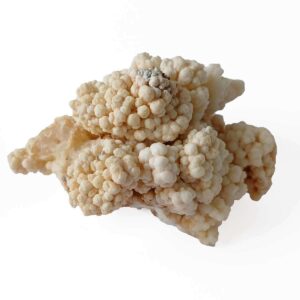
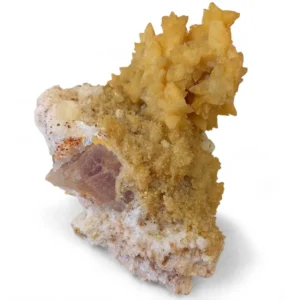
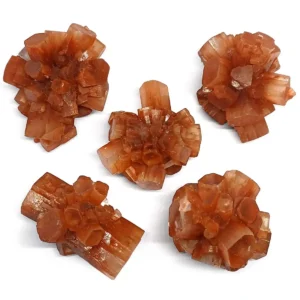
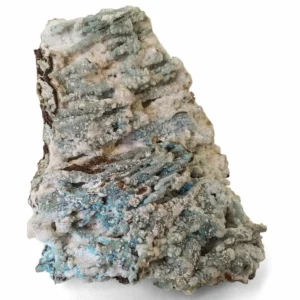
Aragonite comes in different forms. One common type is the “stellar” variety, which has needle-like crystals arranged in a star shape. Another type is “cave” aragonite, which forms delicate branches inside caves. Aragonite can also appear as round clusters that look like grapes. The colors of aragonite vary, including white, yellow, brown, blue, and even red. Each form and color makes aragonite unique.
Where Aragonite Is Found
Aragonite can be found in several places around the world. Notable locations include Arizona, New Mexico, and Nevada in the U.S., as well as Morocco, Spain, Mexico and China. It forms in environments like caves, hot springs, and sedimentary rocks where there are high levels of calcium. Because it is not as common, aragonite can be harder to find.
Physical Qualities of Aragonite
Aragonite has a distinct appearance, often with needle-like or radiating crystals. It is softer than quartz but harder than calcite, with a Mohs hardness of 3.5 to 4. Its crystals can be transparent or translucent, depending on the specimen.
Metaphysical Qualities of Aragonite
Aragonite is believed to have powerful healing properties. It is thought to help ground energy and bring emotional stability. Many people use aragonite to improve focus, increase energy, and relieve stress. It is said to balance the root and solar plexus chakras, promoting a sense of empowerment and calm.
Aragonite is a fascinating mineral, known for its beauty and metaphysical benefits. With its variety of forms and colors, it is a prized specimen for collectors and those interested in its healing properties.