Prehistoric Treasures
Bismuth
About Bismuth
Bismuth Crystals
Overview
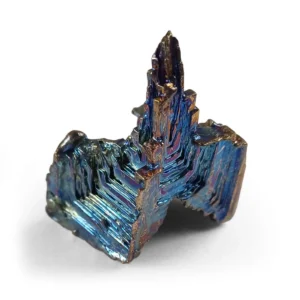
Bismuth is a brittle, crystalline metal known for its stepped, geometric formations and iridescent surface, which displays a range of colours due to oxidation. Bismuth can occur naturally but most collectible specimens are lab-grown to form large, well-defined hopper crystals.
Geological Information
Element: Bismuth (Bi)
Crystal Habit: Hopper, stair-step, geometric
Colour: Iridescent surface with metallic tones (blue, green, purple, yellow)
Hardness: 2–2.5 (Mohs scale)
Density: High specific gravity (~9.78 g/cm³)
Naturally occurring bismuth is rare in crystalline form. The specimens typically offered in mineral collections are synthetic, created through controlled cooling of molten bismuth to form the characteristic stepped, hollow crystals. Bismuth is a post-transition metal often found in hydrothermal veins and is commonly associated with lead, silver, and tin ores.
Scientific Significance
Bismuth is used in various industries including medicine (antacids and anti-inflammatories), cosmetics, alloys, and low-melting-point solders. It is one of the least toxic heavy metals and has a wide range of technological applications due to its diamagnetic properties and low thermal conductivity.
Metaphysical Properties
In metaphysical practice, bismuth is associated with:
Transformation and change
Order and structure
Support in group dynamics and teamwork
It is believed to aid in adapting to new situations, promote connectedness, and provide stability during periods of personal or external transition. Bismuth is often linked to the crown chakra and is used in meditation to encourage mental focus and clear progression through challenges.
Authenticity & craftsmanship
*All Crystals, Minerals, and Fossils are authentic and certifiable.
*Each Jewellery piece is handcrafted from certified 925 Sterling Silver made with precious and semi-precious Crystals.
More filters
Showing the single result